PyTorch入门学习:10-Basic CNN
10 Basic CNN
1 Intro: Convolutional Neural Network
- Why full connected layer isn’t enough? An simple explanation: 考虑图像上上下相邻的两个像素,它们在空间上相近,但是在向量中却相距甚远。因此,单纯的全连接层无法捕捉特征。
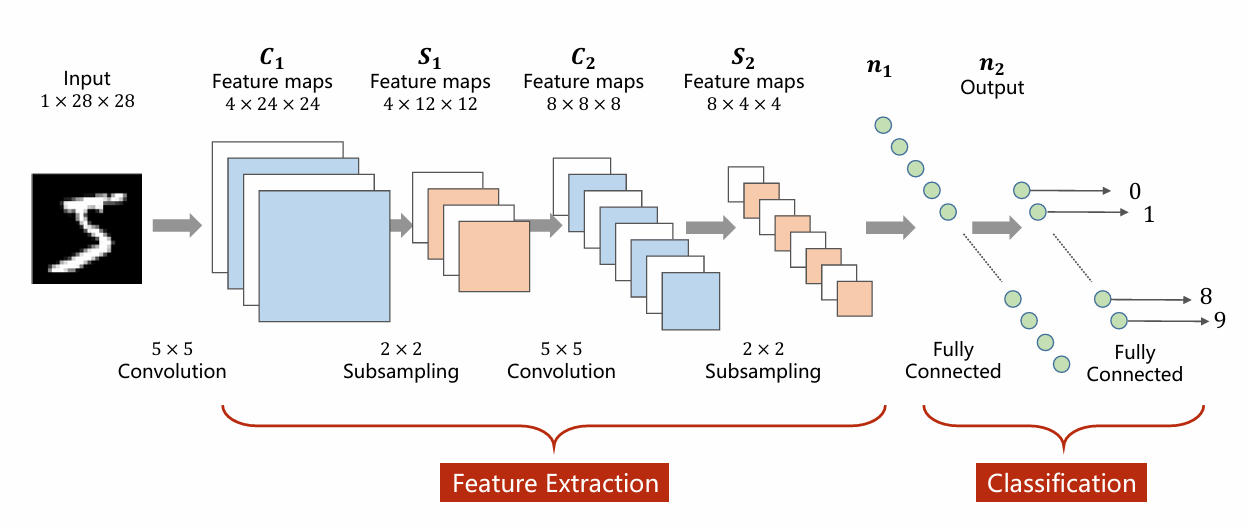
- Advanced network:
- 如图所示,首先经过一个卷积层,张量的维度信息发生变化。
- 经过下采样层,减少运算量。
- 经过卷积层和下采样层,张量的维度信息发生变化。
- 两个全连接层,结果映射到10个类别。
- 以上过程中,卷积和下采样层的作用是提取图像的特征,被称为
Feature Extraction。
2 Deep into Convolution
2.1 Brief Convolution
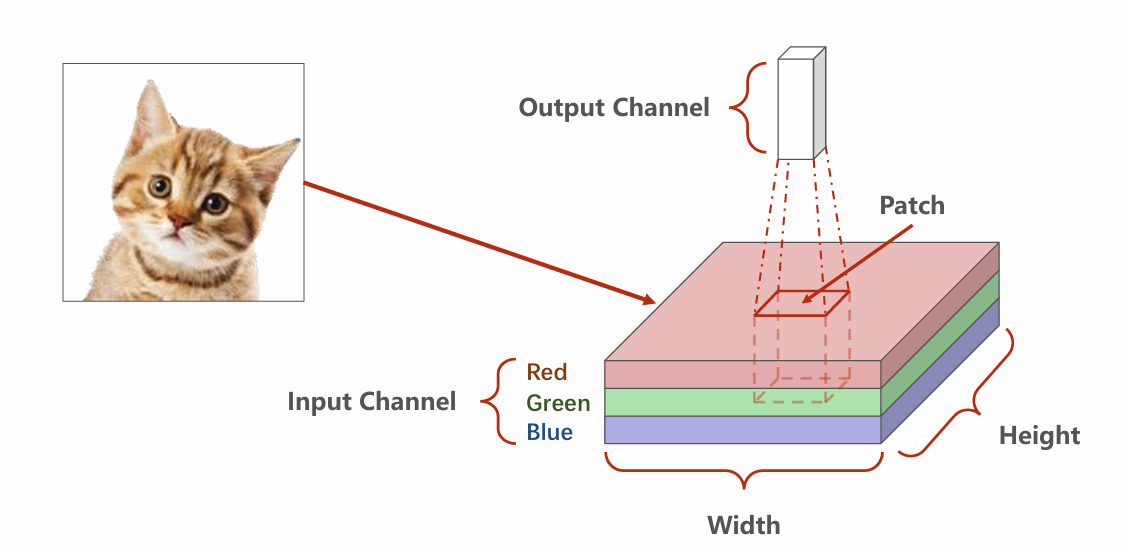 如图,在卷积过程中,每次从原始图像中取一patch,经过处理后其维度信息改变,从
2.2 卷积运算
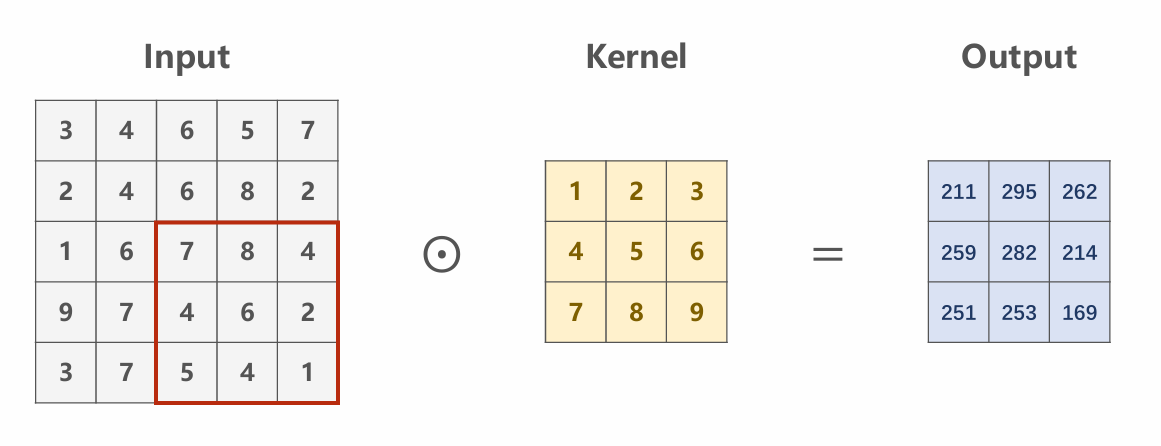 如图所示,图片中展示了一个单通道图像的卷积运算过程,取卷积核大小的块与Kernel进行逐元素相乘并相加,得到Output相应位置的值。
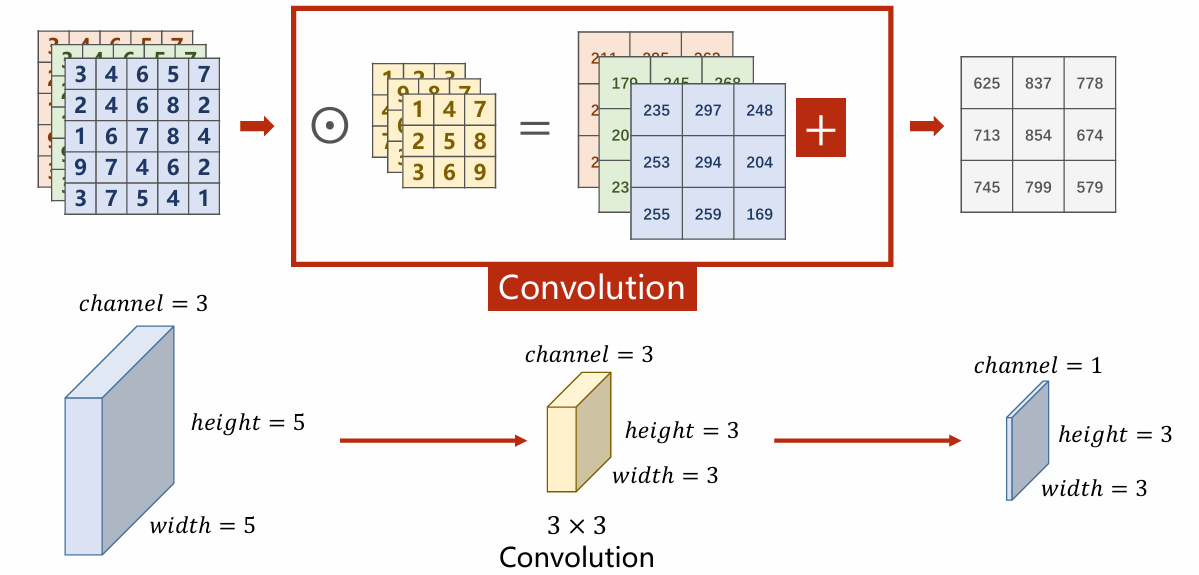 如图所示,对于多通道的图像,则分别对每个通道与不同的kernel进行相乘,最终得到三个output,再将这三个output进行逐元素相加,得到最终的output。
在这个过程中,输入张量维度为
如图所示,对于多通道的图像,则分别对每个通道与不同的kernel进行相乘,最终得到三个output,再将这三个output进行逐元素相加,得到最终的output。
在这个过程中,输入张量维度为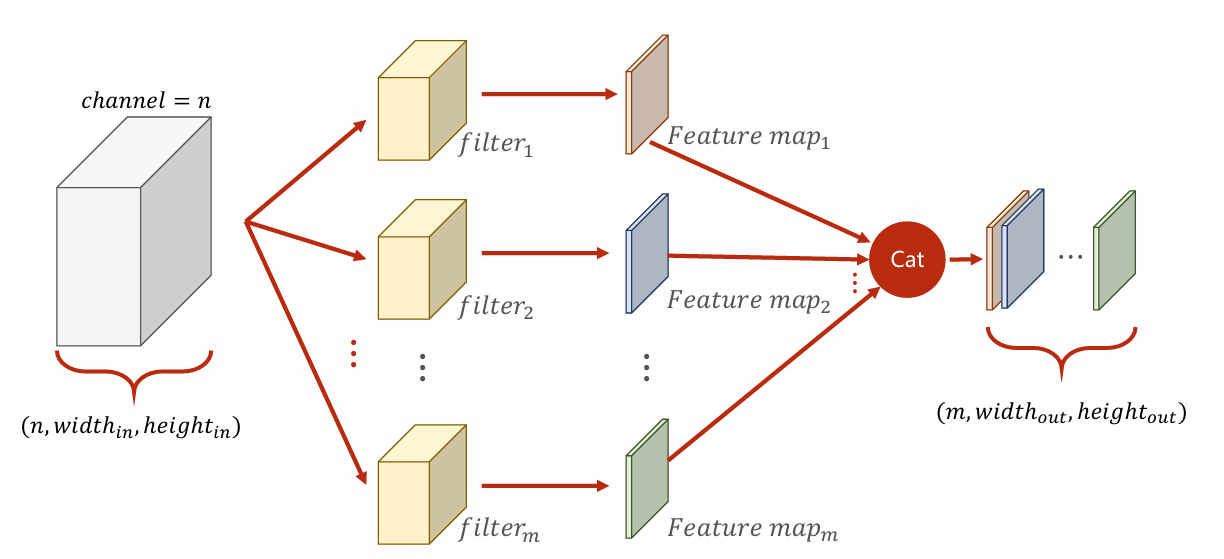 如上图,展示了更复杂的情形,如果要得到通道数为
- Implementation
1 | |
2.3 其他参数
- padding
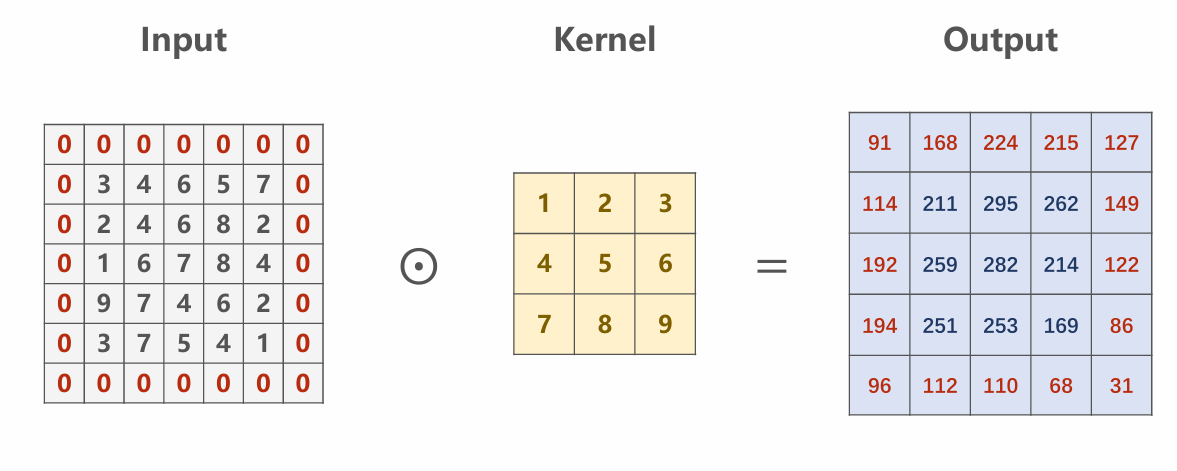 如果在参数中使用padding,那么会在张量周围填充一圈0,获得更大的输出,如图所示。
1 | |
- stride 代表步长
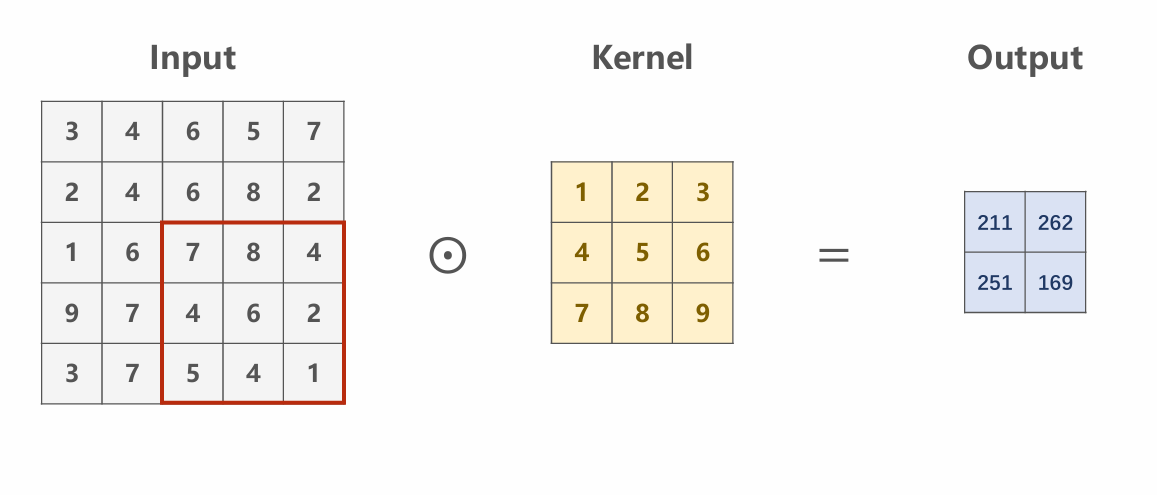 如图,stride=2,在进行卷积运算时,每次与kernel相乘之后会跳过一次卷积进行下下次运算,这可以快速降低张量的大小。
3 Subsampling - Max Pooling Layer
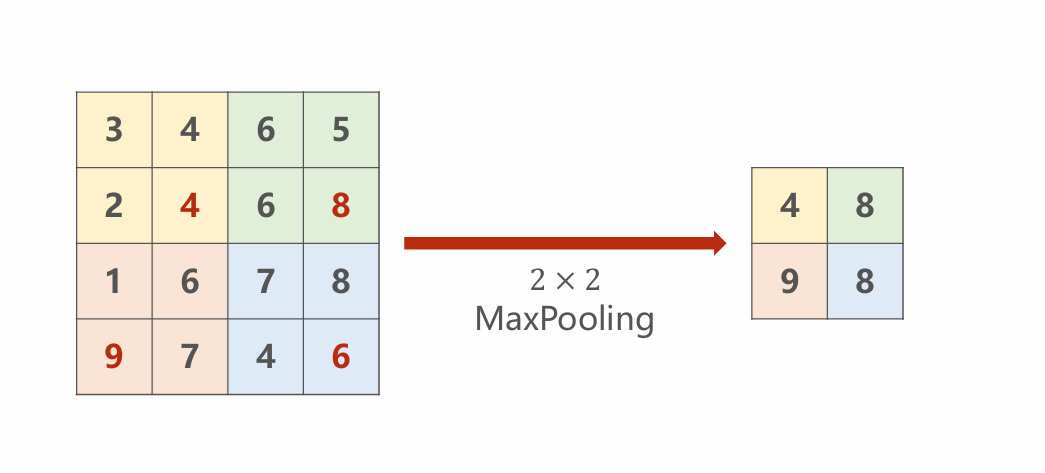 如图展示了常见的下采样方法-MaxPooling的运算过程,
- Implementation
1 | |
4 A Simple Convolutional Neural Network
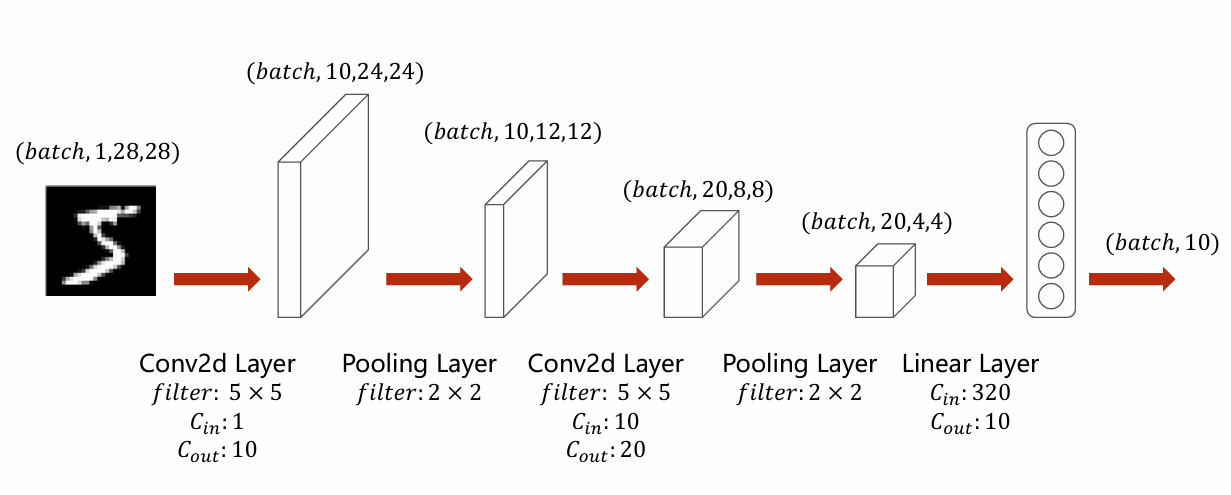 如图,使用CNN对MNIST数据集进行学习
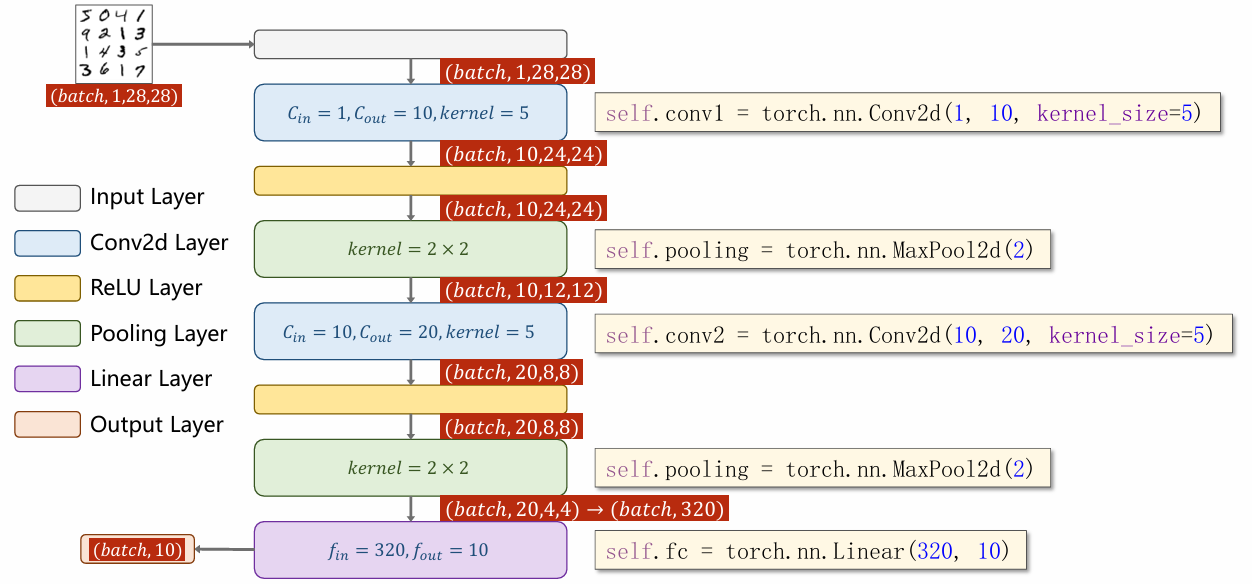
- Implementation
1 | |
5 How to use GPU
- Move Model to GPU
1 | |
- Move Tensor to GPU
1 | |
6 Exercise
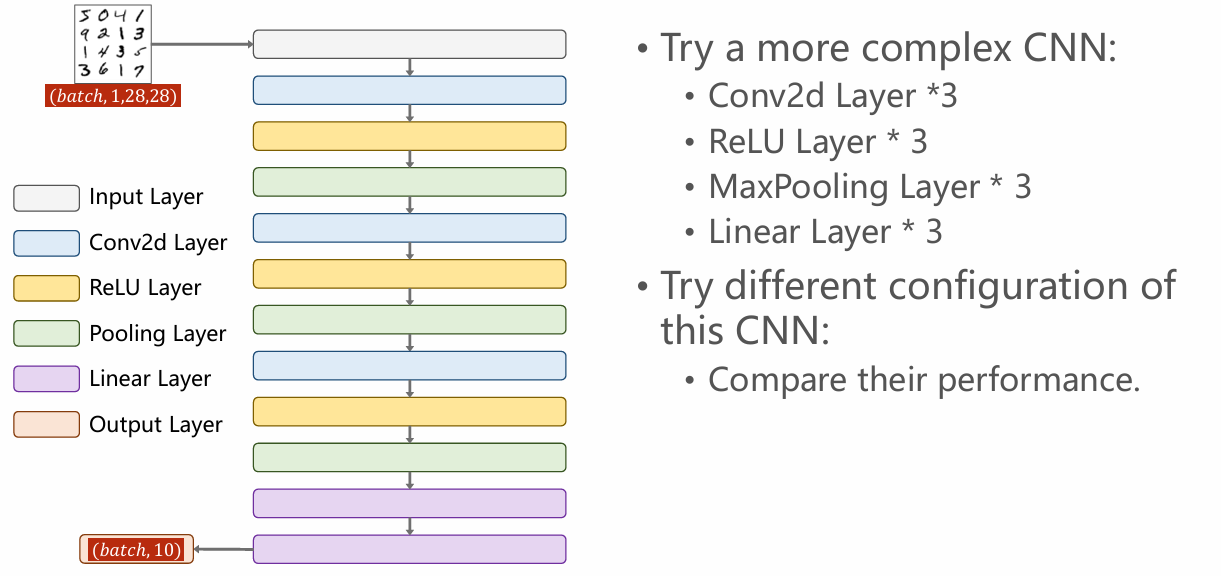
PyTorch入门学习:10-Basic CNN
https://eleco.top/2026/03/02/learn-torch-10-Basic-CNN/